
Proof of financial resources is one of the documents consulates read most closely in a student visa file. It must show, clearly and credibly, that you can pay for your studies and your living costs abroad. Here is how Moroccan students and their parents can prepare it calmly and consistently.
Key takeaways
- Consulates want to be sure that you can live and study abroad without financial difficulty.
- The most common forms are personal bank statements, a sponsor's commitment with proof of income, a scholarship letter and, for Germany, a blocked account.
- Each country sets its own minimum amount and updates it regularly: always check the official figure.
- Consistency and a clear origin of funds matter more than a large balance appearing overnight.
- For transfers from Morocco, the Office des Changes sets the rules; your bank will guide you.
Why do consulates ask for proof of financial resources?
A student visa is granted for studies, not for work. The consulate needs to see that you will be able to pay tuition, rent, food, transport and insurance without depending on unauthorised work or getting into difficulty once you are there.
Financial proof also says something about the seriousness of your project. A clear, stable and well-documented financial situation supports the rest of your file, while confusing or contradictory documents raise questions, even when the amount is sufficient.
What forms of financial proof are accepted?
The accepted forms depend on the destination, but most consulates recognise one or several of the following. Many Moroccan students combine two of them, for example a sponsor's support and a partial scholarship.
- Personal bank statements: recent statements from an account in your name, showing a stable balance.
- Sponsor's support: a notarised or legalised commitment of financial support (attestation de prise en charge), with the sponsor's bank statements and proof of income.
- Scholarship letter: an official letter stating the amount and the duration of the scholarship.
- Blocked account: the usual method for Germany, where a set amount is deposited and released monthly after your arrival.
- Paid tuition or deposit receipts: they show that part of the costs is already covered, which some consulates take into account.
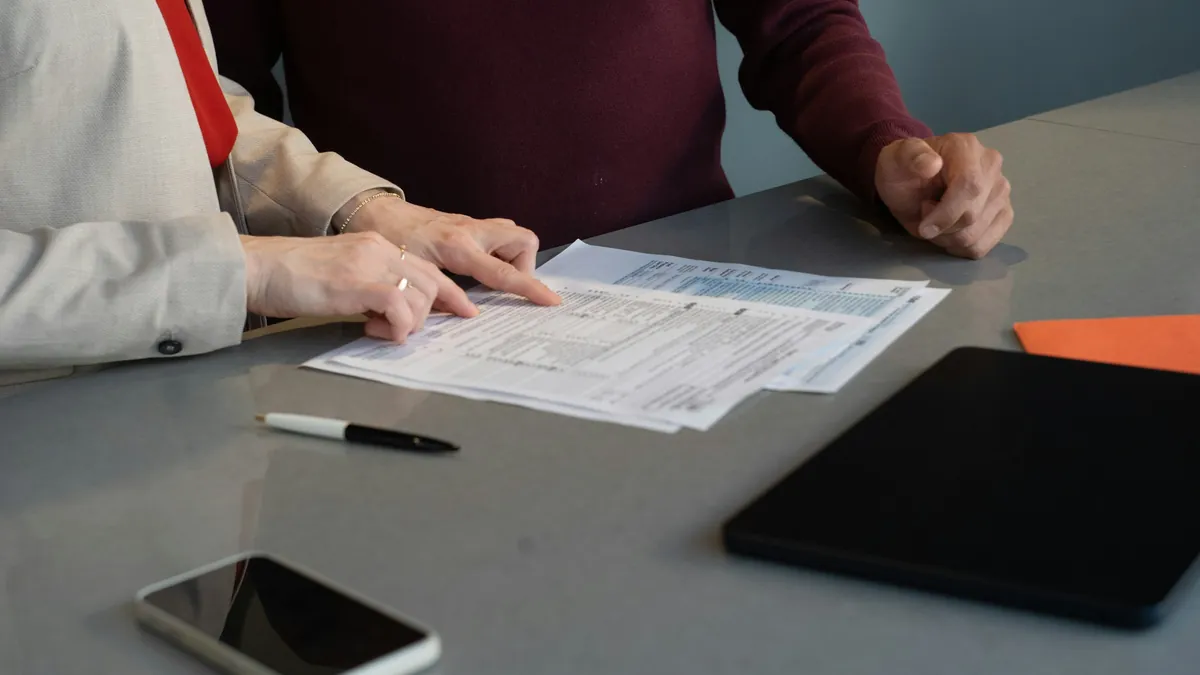
Parents as sponsors: the commitment of financial support
In Morocco, parents are the most common financial sponsors. In that case, the consulate looks at their capacity to pay, not only at a balance. A sponsor file usually includes:
- A signed commitment of financial support (attestation de prise en charge), with the signature certified or notarised as the consulate requires.
- The sponsor's recent bank statements, usually covering several months.
- Proof of the sponsor's income: payslips and an employer certificate, or business documents and tax records for self-employed parents.
- A copy of the sponsor's identity card and, often, a document proving the family relationship, such as a birth certificate.
Translate documents in Arabic with a sworn translator and make sure the names, amounts and dates match the commitment letter exactly.
How much money do you need to show?
There is no single answer: France, Canada, the UK, Germany and the other destinations each set a minimum amount, usually per month or per year, and they update it regularly. Some also require the money to have been held for a minimum period. Never rely on a figure from a forum or an old article; check the official source just before preparing your documents.
| Destination | Usual form of proof | Where to check the current amount |
|---|---|---|
| France | Personal or sponsor's bank statements, commitment of financial support, scholarship letter | France-Visas and Campus France Maroc |
| Canada | Bank statements, sponsor's support, scholarship, or a Guaranteed Investment Certificate (GIC) | IRCC study permit pages |
| United Kingdom | Bank statements in your name or your parents' name, or official financial sponsorship | GOV.UK Student visa pages |
| Germany | Blocked account, scholarship, or another form accepted by the mission | German Embassy in Rabat and German missions |
| United States | Bank statements and sponsor's documents covering the costs shown on the I-20 | Your school's I-20 and travel.state.gov |
| Spain | Personal or sponsor's bank statements, scholarship letter | The Spanish consulate competent for your place of residence |
Remember that the official minimum is a floor, not a budget. Real living costs depend on the city, and a realistic budget protects you once you arrive.
Consistency and origin of funds
A consular officer reads your financial documents as a whole. A large deposit made a few days before the application, with no explanation, is a classic warning sign. What reassures is a coherent picture over time.
- Stable balances: prepare the accounts several months ahead so that the statements show a regular history.
- Explained deposits: if a large amount comes from the sale of property or savings, keep the documents that prove it.
- Matching figures: the amounts in the commitment letter, the bank statements and the visa form must be the same.
- Official documents: use statements stamped by the bank or downloaded in their official format.
Transferring money from Morocco for your studies
Moroccan foreign exchange regulations govern transfers abroad. The Office des Changes sets the rules and allowances for transfers for studies abroad, including tuition and living costs; check with your bank. Ask early which documents the bank needs, such as the admission letter or the enrolment certificate, especially if you must fund a blocked account or pay a tuition deposit before the visa.
Common mistakes to avoid
- Depositing a large amount just before the application without any supporting documents.
- Using an outdated minimum amount found online.
- Submitting a commitment letter without the sponsor's proof of income.
- Different amounts in the commitment letter, the statements and the visa form.
- Waiting until the last week to open a blocked account or arrange a transfer.
Frequently asked questions
Can my parents be my sponsors even if they are self-employed?
Yes. Instead of payslips, they usually provide business documents, tax records and bank statements showing regular income. The key is that their capacity to pay is documented and consistent.
Can a relative other than my parents sponsor me?
Many consulates accept other sponsors, but they often ask for more evidence of the relationship and of the sponsor's resources. Check the rules of your destination before choosing this option.
Is a scholarship enough as financial proof?
It can be if it covers the required amount and is confirmed by an official letter. If it only covers part of the costs, add another form of proof, such as a sponsor's support, for the difference.
How long before the visa should we prepare the bank statements?
Start several months before the application so that the statements show a stable history. Some destinations require funds to be held for a minimum period, so check this early on the official website.
Does the money have to be in a foreign account?
Not necessarily. Many destinations accept statements from Moroccan banks, sometimes with a translation. Germany is an exception, as the blocked account is opened with an approved provider.
How ProTrain can help
ProTrain helps families build a clear and consistent financial file as part of our student visa support. We explain what each consulate usually expects, check that the documents tell the same story, and keep parents informed through our follow-up for parents. The final assessment belongs to the consulate. Book a consultation in Guéliz, Marrakech, or online.
Official sources
- France-Visas: financial resources required for a long-stay student visa.
- IRCC study permit: current proof of funds amount and accepted documents.
- GOV.UK Student visa: money you need and how long you must have held it.
- German Embassy Rabat: blocked account and other accepted forms of proof.